Introduction
OpenJS Electron 40.8.0 PC Software,In the world of modern software development, building powerful desktop applications that work across multiple operating systems has become easier and more efficient than ever before. OpenJS Electron 40.8.0 is the latest stable iteration of Electron — an open‑source framework that enables developers to create cross‑platform desktop apps using familiar web technologies such as JavaScript, HTML, and CSS. Backed by the OpenJS Foundation, Electron has become a cornerstone tool for developers around the globe, powering high‑profile applications like Visual Studio Code, Slack, Discord, Figma, and GitHub Desktop by bundling the Chromium browser and Node.js runtime into a seamless desktop framework.
OpenJS Electron 40.8.0 continues this tradition — wrapping web technologies into native‑capable desktop applications that run on Windows, macOS, and Linux without requiring developers to learn multiple native programming languages. It simplifies development, reduces duplication, and lets teams maintain a single codebase while delivering consistent performance across platforms.
Overview
Originally created by GitHub and now maintained by the OpenJS Foundation, Electron has grown into one of the most popular frameworks for building desktop applications with web technologies. While Electron is not a traditional “software install” for end users, it is a foundational framework used by developers to create and test production‑ready desktop software.
Version 40.8.0 represents an updated release in the Electron 40 series, qualifying as a stable version suitable for production use. Although detailed release notes for 40.8.0 are less publicized than the major 40.0.0 release, Electron 40 updates focus on staying in sync with the latest components of Chromium, Node.js, and the V8 JavaScript engine, ensuring security improvements, performance enhancements, and access to new web platform capabilities.
With Electron 40, embedded commercial and open‑source apps benefit from updated runtime stacks, improved developer APIs, and ongoing quality‑of‑life refinements that strengthen both app stability and developer productivity across supported desktop platforms.
Description
OpenJS Electron is a free, open‑source development framework used to create native‑like desktop applications using web technologies developers already know. Unlike traditional desktop SDKs that require language expertise in C++, Swift, or Java, Electron lets you write code once in HTML, CSS, and JavaScript — and package it for distribution on all major operating systems.
At its core, Electron bundles three major components:
-
Chromium — the open‑source browser engine that renders the user interface of apps.
-
Node.js — a JavaScript runtime that enables filesystem access and backend logic.
-
Electron API layer — bridges between web code and native desktop APIs.
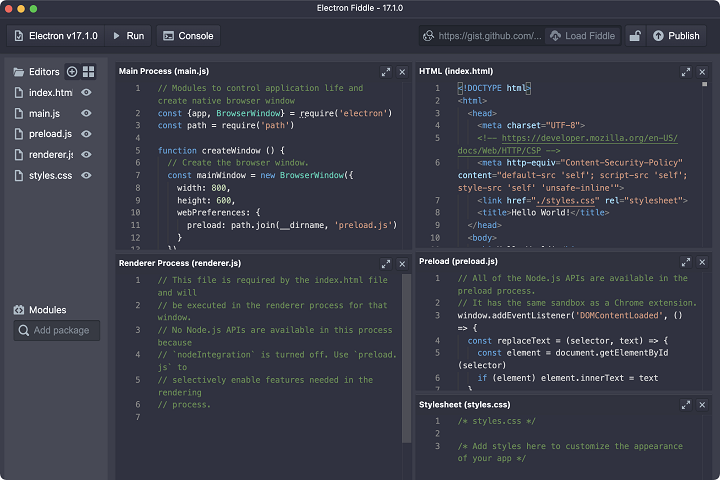
This combination means developers can build rich user interfaces and access native OS capabilities such as file handling, menus, notifications, clipboard support, and system dialogs — all from JavaScript. Electron also supports features like auto‑updates, crash reporting, and native installer creation through tooling such as Electron Forge, electron‑builder, and Electron Fiddle.
Many major desktop applications you interact with every day are built with Electron — from collaboration tools like Slack to productivity software like Visual Studio Code — all demonstrating the framework’s flexibility and robustness.
Key Features
Here are some of the most important capabilities that make OpenJS Electron 40.8.0 a compelling choice for desktop app development:
1. Cross‑Platform Compatibility
Electron apps run natively on Windows, macOS, and Linux — eliminating the need to write separate native code for each OS.
2. Web Technology Foundation
Developers can build desktop apps using HTML, CSS, and JavaScript — leveraging the same technologies used in web development.
3. Chromium Rendering Engine
Electron embeds Chromium so that apps use a modern, standards‑compatible browser engine to display interfaces and execute web code.
4. Node.js Integration
Node.js support allows developers to run backend logic, access the filesystem, and integrate with operating system services — all from within one unified environment.
5. Rich API Set
Electron provides APIs for native menus, dialogs, notifications, clipboard access, and more — making apps feel native even if built with web code.
6. Developer Tooling and Templates
Toolkits like Electron Forge and Electron Fiddle help scaffold, test, and package apps quickly, reducing setup and deployment time.
7. Auto‑Update Support
Electron’s update mechanisms (integrated with modules like autoUpdater) help developers deliver seamless updates to users on any platform.
8. Strong Open Source Backing
Maintained by the OpenJS Foundation, Electron benefits from ongoing updates, community contributions, and alignment with modern web standards.
How to Install
Unlike typical end‑user software, Electron is typically installed by developers as part of a software development project. Here’s how to include Electron 40.8.0 in a Windows development environment:
Step 1: Install Node.js
Ensure Node.js is installed on your system. Visit the official Node.js website to download and install the LTS version. This provides the runtime that Electron needs.
Step 2: Set Up a Project Folder
Create a new folder for your Electron project and open a command prompt or terminal in that directory.
Step 3: Initialize npm
In the terminal, run:
This creates a package.json file for managing dependencies.
Step 4: Install Electron
Install the specific version of Electron with:
This pulls Electron 40.8.0 from the npm registry and adds it to your project.
Step 5: Create Main Files
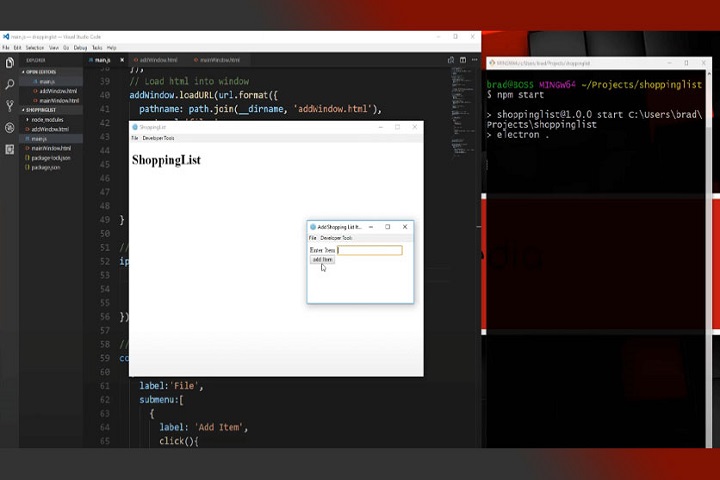
Create basic files such as main.js and index.html to define the main process and UI of your app.
Step 6: Run Your App
Add a start script to package.json:
“start”: “electron .”
}
Then execute:
Your Electron app will launch in a desktop window.
System Requirements
To work with Electron 40.8.0 effectively (especially for development on Windows), your system should meet these criteria:
Operating System
• Windows 10 or later
• (Electron also supports macOS and Linux development environments.)
Processor
• Modern multi‑core CPU (Intel/AMD) for smooth development and testing.
Memory (RAM)
• Minimum: 4 GB
• Recommended: 8 GB+ (for complex apps and testing)
Disk Space
• Enough storage for Node.js, npm packages, and project files (at least 500 MB free)
Development Tools
• Node.js and npm installed
• Code editor (e.g., Visual Studio Code)