
Introduction
SoftPerfect Mobile Broadband Toolkit 1.0.3 PC Software has evolved from a luxury to an absolute necessity. Whether you’re a remote worker relying on a 4G/5G dongle, a traveler using a smartphone’s hotspot, or someone in an area with limited fixed-line options, the stability and performance of your mobile internet connection are paramount. However, managing and diagnosing these connections has often been a fragmented process, buried within operating system menus or carrier-specific software. This comprehensive toolkit empowers users to monitor, analyze, and optimize their cellular data connections directly from their Windows desktop.
Overview
SoftPerfect Mobile Broadband Toolkit is a specialized utility developed by the reputable software firm, SoftPerfect Research. Known for utilities like NetWorx and WiFi Guard, the company has crafted this toolkit to address the unique challenges of mobile broadband users. Version 1.0.3 represents a refined and stable release, focusing on core functionalities that bridge the gap between typical network tools and the specific nuances of cellular data connections. It serves as a centralized dashboard, replacing the need for multiple disjointed applications to perform tasks like data usage tracking, signal strength monitoring, or network scanning. Its clean interface and focused toolset make it an invaluable companion for anyone who depends on a mobile USB modem, MiFi device, or tethered phone for their primary internet access.
Description
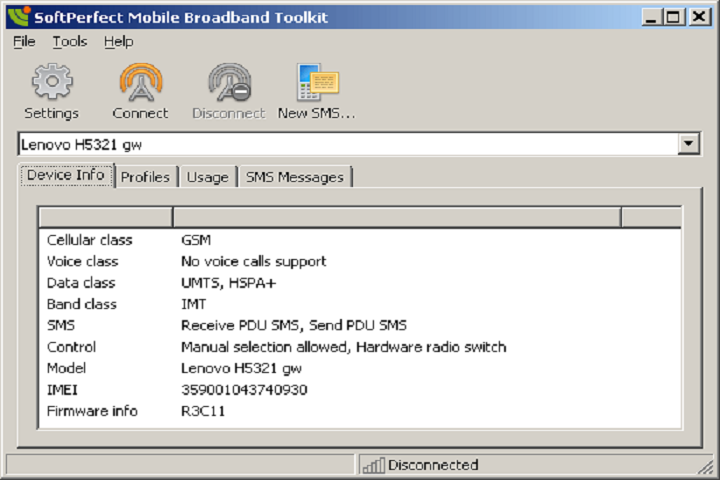
At its core, the SoftPerfect Mobile Broadband Toolkit is a suite of integrated tools that communicate directly with your mobile broadband device via the Windows Mobile Broadband API. Unlike generic network software, it understands the language of cellular networks—IMSI, IMEI, signal RSSI/RSRQ, carrier information, and data roaming states. The software acts as an intelligent layer between your hardware and the operating system, providing detailed insights and control options that are otherwise inaccessible or poorly presented.
The main program window is intuitively divided into sections reflecting the connection lifecycle: status, monitoring, and diagnostics. Upon launching, it automatically identifies your connected mobile broadband adapter, establishing a direct link to pull real-time information. It’s not just a passive monitor; it’s an active management suite. From forcing a network re-registration to manually selecting a preferred network operator, the toolkit gives you the reins.
Key Features
-
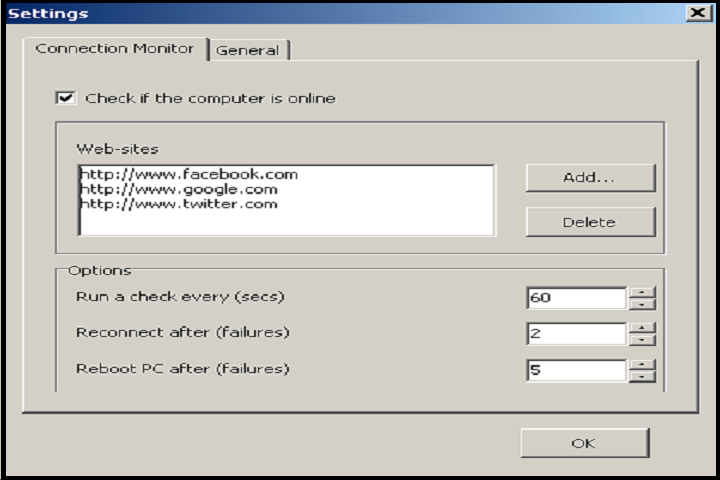
Comprehensive Connection Dashboard: View all vital statistics in one place: connection status, network name (MCC/MNC), signal strength (graphical and numerical), IP addresses, data speeds, session duration, and data transferred.
-
Advanced Signal Monitoring: Go beyond basic bars.This is crucial for pinpointing the best physical location for your modem for optimal performance.
-
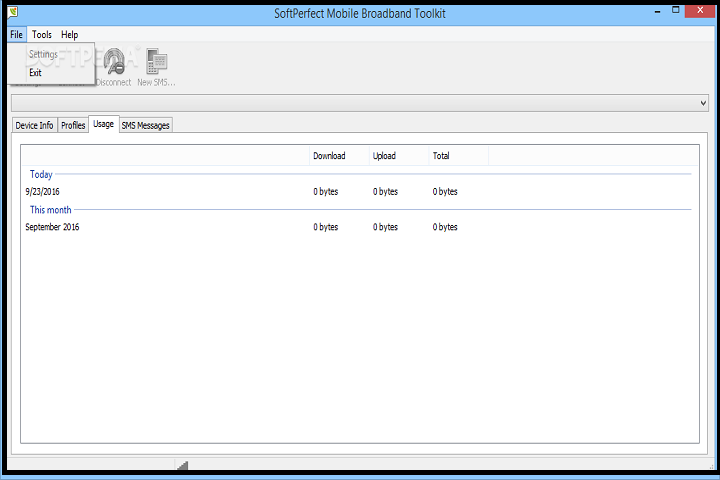
Precise Traffic Accounting & Quota Management: Track data usage with surgical precision. Set custom billing cycle dates and hard or soft data limits (quota).It logs daily, weekly, and monthly usage.
-
Network Registration & Control: Manually scan for all available mobile networks in your area and choose which one to register on—a boon for international travelers seeking the best local partner network or users in border regions.
-
Device and SIM Information: Retrieve and display essential hardware and subscription details, including the modem’s IMEI, the SIM card’s IMSI, ICCID, and the subscriber’s MSISDN (phone number), providing a quick reference for support requests or account management.
-
Connection Automation & Profiles: Create profiles to automate connection and disconnection.
-
Ping & Traceroute Diagnostics: Integrated network diagnostics tools allow you to ping critical hosts (like DNS servers) or perform a traceroute directly from the interface, helping to isolate connectivity issues to your local connection, the carrier’s network, or the broader internet.
-
Data Usage Reports & Export: Generate clear, visual reports of your data consumption over time.
-
Lightweight & Non-Intrusive: The software runs efficiently in the system tray, offering a compact monitoring window and configurable notifications for connection changes or quota alerts without slowing down your system.
How To Install
Installing SoftPerfect Mobile Broadband Toolkit 1.0.3 is a straightforward process:
-
Download: Obtain the latest installation package (version 1.0.3) from the official SoftPerfect website. Ensure you download the correct version for your system architecture (32-bit or 64-bit).
-
Run Installer: Locate the downloaded executable file (e.g.,
mbtdk_setup.exe) and double-click to run it. If prompted by User Account Control (UAC), click “Yes” to allow the installer to make changes. -
Setup Wizard: Follow the steps in the setup wizard.
-
Installation: Click “Install” to begin the file copy process. This usually takes only a few moments.
-
Completion: Once installation is complete, you can choose to launch the software immediately.
-
First Launch: Upon first launch, the toolkit will scan for mobile broadband interfaces. The software should automatically detect it and populate the dashboard with information.
System Requirements
To run SoftPerfect Mobile Broadband Toolkit 1.0.3 effectively, your system should meet the following requirements:
-
Operating System: Windows 11, Windows 10, Windows 8.1, Windows 8, Windows 7, Windows Vista, or Windows Server 2008 and later.
-
Mobile Broadband Device: A Windows-compatible USB mobile broadband modem (4G/LTE, 5G), a MiFi device with USB tethering functionality, or a smartphone set up for USB tethering.
-
Windows Drivers: The necessary drivers for your mobile broadband device must be installed. These are usually installed automatically when you first plug in the device or come with the device’s own software suite.
-
Disk Space: A minimal amount of free storage space (less than 10 MB) for the application and its log files.
-
Memory (RAM): At least 512 MB of RAM (though more is recommended for general system performance).