Introduction
Universal USB Installer 2.0.3.0 PC Software, In today’s computing environment, bootable USB drives have become essential for installing operating systems, running live Linux distributions, and performing system recovery. Universal USB Installer 2.0.3.0 is a powerful and easy-to-use Windows PC software that allows users to create bootable USB drives for a wide variety of operating systems and utilities.
Whether you are a system administrator, IT professional, student, or casual user, Universal USB Installer makes creating bootable USB drives fast and straightforward. With its lightweight design and support for multiple Linux distributions, Windows installers, and recovery tools, this software ensures that users can quickly prepare USB drives for installation or troubleshooting.

Overview
Universal USB Installer 2.0.3.0 is a Windows-based utility designed to create bootable USB drives from ISO files. Unlike traditional DVD installations, USB drives are faster, reusable, and compatible with modern PCs that lack optical drives. This tool simplifies the process of transferring ISO images to USB drives with a few clicks, without requiring advanced technical skills.
The software supports a wide variety of Linux distributions, including Ubuntu, Fedora, Linux Mint, and Kali Linux, as well as Windows installers from Windows XP to Windows 11. It also supports specialized tools like antivirus rescue disks, partitioning utilities, and system recovery ISOs.
Universal USB Installer is highly popular among IT professionals and tech enthusiasts for its simplicity, reliability, and broad compatibility, making it a go-to solution for creating bootable media on Windows PCs.
Description
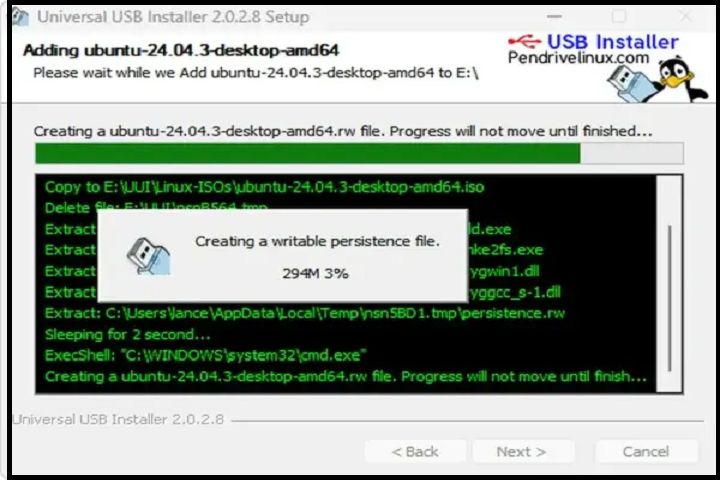
Universal USB Installer 2.0.3.0 works by copying ISO files to USB drives and making them bootable. The software automates the formatting, partitioning, and bootloader setup, ensuring that USB drives are ready for use in installing or running operating systems.
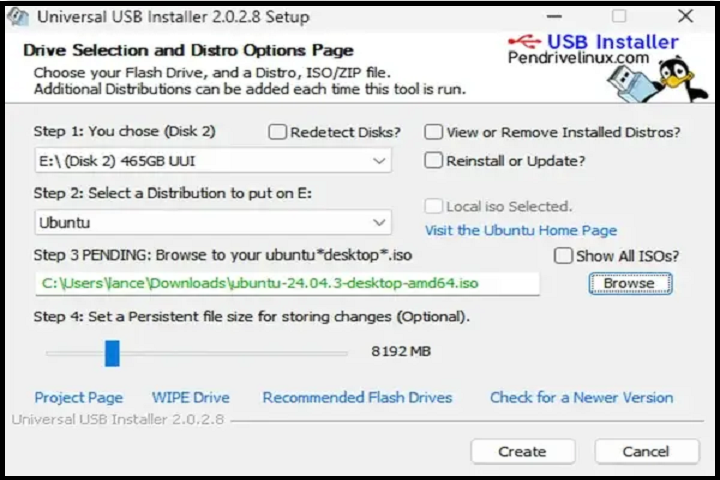
Users can select the ISO file, choose the target USB drive, and configure optional persistence for certain Linux distributions. Persistence allows users to save settings and files on live Linux USB drives, making them portable and customizable.
The software features a step-by-step interface, guiding users through ISO selection, USB formatting, and bootloader configuration. It also verifies ISO compatibility and provides error messages for unsupported files, reducing the risk of creating non-functional USB drives.
Universal USB Installer is lightweight and portable, allowing users to carry it on a USB stick for quick access on any Windows PC. It supports FAT32, NTFS, and exFAT file systems, ensuring maximum compatibility across different operating systems and BIOS/UEFI systems.
Key Features
Universal USB Installer 2.0.3.0 offers a variety of features for creating bootable USB drives efficiently:
-
Wide OS Compatibility – Supports Linux distributions, Windows installers, and recovery tools.
-
Step-by-Step Interface – User-friendly wizard guides you through the process.
-
Persistence Support – Save settings and files on certain live Linux USB drives.
-
Lightweight & Portable – Small executable that can run without installation.
-
Multiple File System Support – Works with FAT32, NTFS, and exFAT drives.
-
USB Formatting and Bootloader Setup – Automatically prepares the USB for booting.
-
Error Checking – Verifies ISO file compatibility before proceeding.
-
Quick and Reliable – Creates bootable drives in minutes.
-
Supports BIOS & UEFI – Compatible with modern and legacy PC systems.
-
Free to Use – Openly available for personal and professional use.
These features make Universal USB Installer 2.0.3.0 an essential tool for anyone who regularly works with bootable media.
How To Install Universal USB Installer 2.0.3.0
Installing and using Universal USB Installer 2.0.3.0 is simple:
-
Double-click the downloaded
.exefile to run it (no installation is required). -
Accept the license agreement if prompted.
-
Select the desired Linux distribution, Windows installer, or utility ISO from the dropdown menu.
-
Browse and select the ISO file from your computer.
-
Choose the target USB drive from the list of connected drives.
-
Configure optional persistence if using supported Linux distributions.
-
Click Create to begin transferring the ISO to the USB drive.
-
Wait for the process to complete, then safely eject the USB drive.
The USB drive is now bootable and ready for installation or live use.
System Requirements
Universal USB Installer 2.0.3.0 is lightweight and compatible with most Windows PCs:
Minimum System Requirements
-
Operating System: Windows 7, 8, 10, or 11
-
Processor: Intel or AMD processor (any generation)
-
RAM: 512 MB
-
Storage: 100 MB free space for the software; additional space required for ISO files
-
USB Drive: Minimum 2 GB (larger drives recommended for modern OS)